

The US research organization Report Oceans recently published a research report evaluating the growth of elastomers in the 3D printing market, estimating that the elastomer market will reach $1.4 billion (nearly 10 billion RMB) within eight years, with an annual growth rate of 22.5% from 2022 to 2030. The healthcare and automotive industries are expected to be the two main market growth points.
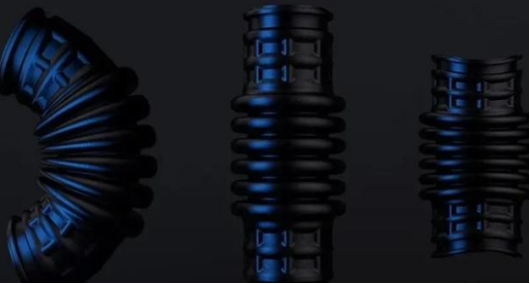
△预计3D打印弹性体市场将达到13.89亿美元
Elasticity can withstand significant deformation before fracture, and these deformations are usually reversible. For this reason, they are often used in products that can withstand severe impacts or vibrations, such as car tires, industrial molded products, industrial drive belts, prosthetics, consumer products, medical equipment, etc. In addition, elastomers are also difficult to compress, making them the preferred material for manufacturing seals.
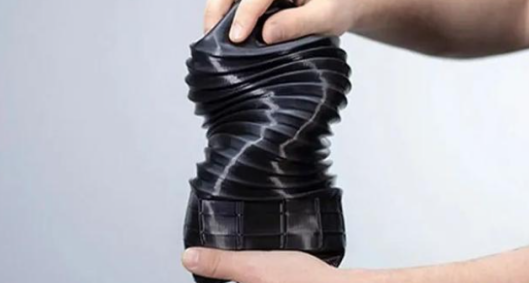
△zortrax制造的弹性体结构件
In 3D printing technology, thermoplastic elastomers are widely used in many industries, including medical, automotive, and even consumer goods (such as sports equipment). According to a study by Report Oceans, the impact of the global pandemic has led to the growth of the 3D printed elastomer market, driven by factors such as medical protective equipment and face shields.
According to the report, organic silicone elastomers have a huge share in additive manufacturing and will continue to grow.
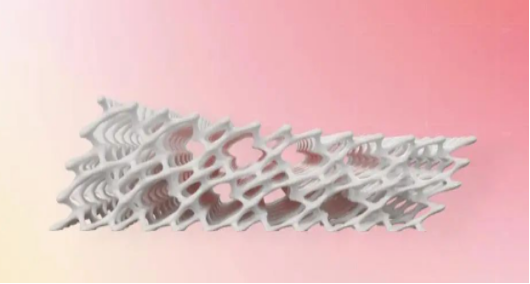
△晶格结构弹性体
Among industry companies, machine manufacturers 3D Systems and Carbon are recognized for making significant contributions to driving market growth in this market. For example, Carbon offers four types of elastomeric resins, including one biocompatible material. Especially in the soles produced by Adidas, these solutions have been seen. Therefore, it is not surprising that the largest market share will be in North America.
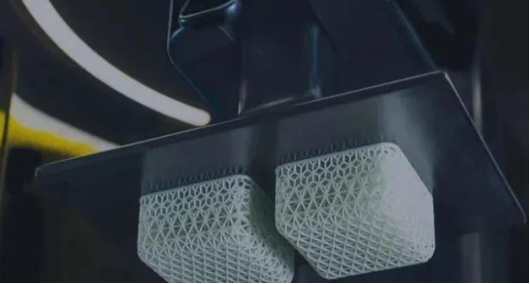
△Carbon为3D打印制造提供不同的弹性体
However, the study also suggests that the cost of elastomers may suppress market growth. However, this will not prevent market participants from innovating and continuing to research elastomers, such as Texas A&M University, which has developed a recyclable and self-healing elastomer for additive manufacturing.
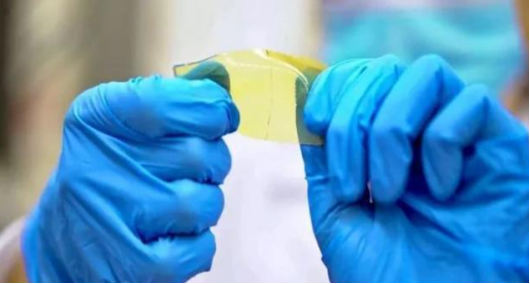
△研究人员开发了一种新的聚合物材料,可以自我修复、具有形状记忆并且可以回收再利用
Future and wider applications of elastomers
As early as 2020, A&M University and the US Army Research Laboratory jointly developed a series of synthetic materials with self-healing capabilities. It is reported that the texture of the polymer varies from ultra soft to extremely hard.
They can be 3D printed, recycled, and adhered to each other in air and underwater. This type of material is expected to meet various military application requirements.
Svetlana Sukhishvili, a professor in the Department of Materials Science and Engineering and corresponding author of the study, said: 'We have created an exciting set of materials whose properties can be fine tuned to achieve the softness of rubber or the strength of load-bearing plastics.'.
They also have other features, such as 3D printability and the ability to self repair within seconds, making them not only suitable for more realistic prosthetics and soft robots, but also very suitable for a wide range of military applications, such as aircraft and wings that can always achieve self repair in the future
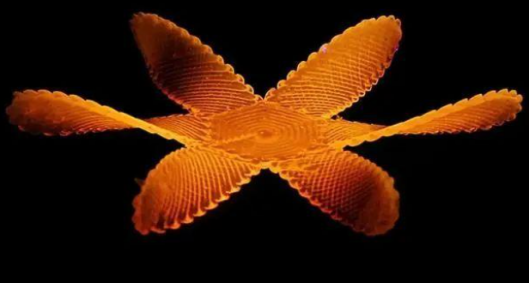
△研究人员用两层具有不同特性的LCE制成3D打印结构,结果表明,这种材料拥有更大的驱动自由度。未来可用于医疗应用
In addition, the 3D printed liquid crystal elastomer developed by the University of California can make soft robots and wearable devices easier to implement. They claim that by controlling the printing temperature of 3D printed liquid crystal elastomers, they can control the stiffness and shrinkage ability of the material.
Moreover, they can change the stiffness of different regions in the same material by heating. Liquid crystal elastomers (LCEs) can generate large reversible driving forces and work densities, making them highly suitable for building new soft robots, wearable devices, artificial muscles, and biomimetic systems in the future.